A tracheostomy opens a direct airway into the neck. Its prevalence in long-term care is increasing, and some providers assert that early tracheostomy in mechanically ventilated patients may decrease complications and reduce morbidity.


Sam D. Say is owner and CEO of SSCOR, Inc., a medical device manufacturer specializing in emergency battery operated portable suction devices for the hospital and pre-hospital settings. Mr. Say has been involved in developing product for healthcare providers for over 35 years. His passions include contributing to the management of the patient airway and providing solutions that save lives in difficult conditions.
Nov 28, 2024, 8:00:00 AM
A tracheostomy opens a direct airway into the neck. Its prevalence in long-term care is increasing, and some providers assert that early tracheostomy in mechanically ventilated patients may decrease complications and reduce morbidity.
Topics: Airway management
Nov 23, 2024, 8:00:00 AM

Preplanning is part of the job as an emergency responder. Each shift, you must be prepared to answer any type of emergency that your community throws at you, so you had better plan ahead. When it comes to your equipment, especially your pharyngeal suction device, you want a unit that will fit the needs of the community in which you work. Here are a few considerations when choosing a portable suction unit.
Topics: Medical Suction
Nov 21, 2024, 8:00:00 AM
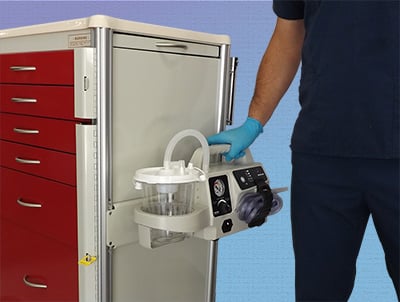
Suction plays a critical role in numerous medical procedures. It’s also a key component of every tactical medical kit. Yet many first responders and other medical professionals are familiar with only one or two suction aspirators. In an emergency or when you collaborate with another agency, your familiarity with a wide range of suction equipment may be the most important factor in patient outcomes. Here are the types of suction aspirators you might encounter.
Topics: Aspiration
Nov 9, 2024, 8:00:00 AM

When you think of intubation, you should automatically be thinking of suction. The two treatments go hand-in-hand; you cannot safely intubate without the aid of suction, which is why you must include a portable suction unit any time there is the possibility of intubating.
Topics: EMS suction, nasotracheal intubation
Nov 7, 2024, 8:00:00 AM

There are many medical and traumatic causes for a decreased level of consciousness, any of which can lead to a respiratory emergency. A thorough patient assessment and quick diagnosis, followed by aggressive treatment, can prevent the patient's condition from deteriorating. But even optimal care cannot stave off every respiratory complication.
Topics: Emergency medical suction, EMS suction, Medical Suction
Nov 2, 2024, 8:00:00 AM

Pediatric emergencies are always a bit unsettling. Fortunately, children make up a minority of our patients, but when these emergencies occur, it can be stressful—for the patient, for the patient’s family, and for you, the responder.
Topics: Airway management
Oct 31, 2024, 8:00:00 AM

Chronic obstructive pulmonary disease (COPD) affects almost 12 million people in the United States. Though people of widely varying health profiles can develop this disorder, it is more common among people who smoke. Suctioning these patients demands skill and compassion. Here’s what you need to know about suctioning a patient with COPD.
Topics: Airway management
Oct 26, 2024, 8:00:00 AM

With the advent of minimally invasive in-office procedures, patients are increasingly choosing sedation instead of general anesthesia. Sedation exists on a continuum, ranging from very mild sedation to deep sedation, but it is generally safer than anesthesia and requires a shorter recovery time. Patients also may require sedation in some emergency medicine scenarios.
Topics: Medical Suction
Oct 24, 2024, 8:00:00 AM

Anyone working in patient care knows how important oropharyngeal suctioning is to maintaining airway patency. Not only does it remove bodily fluids (blood, mucus, saliva, and vomit) from the airway, but it also allows visualization of the vocal cords during intubation—a crucial step in establishing an advanced airway.
Topics: Medical Suction
Oct 19, 2024, 8:00:00 AM

Around 1.4 million people living with a life-limiting illness receive care from hospices in the United States annually. To optimize the quality of life for patients in hospice and palliative care settings, healthcare providers must be knowledgeable about the unique breathing problems and airway emergencies these patients experience, along with the best methods for airway management and treatment.
Topics: Airway management