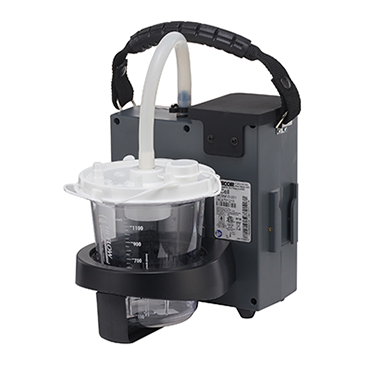
Efficient emergency medical responses are defined by the principle to "be quick, but don’t hurry," a concept famously advocated by coach John Wooden that requires a balance of clinician training and intuitive equipment design. This mechanism allows a well-trained provider to execute life-saving skills rapidly while minimizing the risk of errors caused by rushed movements. Understanding how equipment design improves emergency medical response is essential for prioritizing devices with straightforward controls to optimize patient outcomes during high-stress airway management and resuscitation procedures.
Key Takeaways
-
- Intuitive device controls directly reduce the risk of human error during high-stress medical emergency procedures.
- Proper equipment selection balances clinical training requirements with the need for rapid, efficient device deployment.
- Standardizing device interfaces across hospital and field environments improves clinician performance and reduces cognitive load.
- Portable medical devices must maintain full functionality and stability during patient transport to ensure continuous care.
- Selecting essential features over unnecessary complexity streamlines emergency workflows and enhances overall patient safety outcomes.
Read More
Topics:
Handheld portable suction,
Emergency medical suction,
Suction for EMS professionals,
EMS suction,
Patient Transport,
Emergency Preparedness,
EMS Professionals
Medical suction is the combination of vacuum pressure and airflow used to remove fluids and particulates from a patient's airway. While the goal is not to remove air itself, airflow is the mechanism that entrains and moves both fluids and solids. Understanding the relationship between vacuum and flow is critical for effective airway management, and clinicians must prioritize learning how vacuum and airflow affect medical suction to ensure patient safety.
Key Takeaways
-
Medical suction functions through the combined mechanical forces of vacuum pressure and consistent airflow.
-
Airflow serves as the essential mechanism for entraining and transporting both liquid and solid particulates.
-
Effective airway management requires both vacuum power for movement and airflow for material entrainment.
-
Clinical suctioning efficiency depends on the device's ability to gather contaminants from the surrounding area.
-
Successful resuscitation relies on the timely removal of inconsistent airway materials to restore oxygen supply.
Read More
Topics:
Emergency medical suction,
Airway management,
Suction for EMS professionals,
EMS suction,
Medical Suction,
airway obstruction,
Aspiration,
Suction Catheter,
Suction during resuscitation,
Preventing aspiration
Whether you have a disability or someone you know has one, disability impacts everyone at all ages and stages of life. According to the Centers for Disease Control and Prevention, more than one in four adults in the U.S. has some type of disability, and 12.2% of U.S. adults have a mobility disability with serious difficulty walking or climbing stairs.
Read More
Topics:
Emergency medical suction,
Airway management,
Emergency Preparedness,
medical scenarios,
emt scenarios
For every 100 Americans, about five made an emergency room visitto a community hospital in 2022. And this number doesn’t even include millions of hospital inpatient stays or outpatient procedures, further emphasizing the importance and challenge of providing quality care every time someone walks in or is wheeled in the door.
Read More
Topics:
Portable suction for hospitals,
Emergency medical suction
Every nurse knows durable medical equipment doesn’t last forever.
When was the last time you kicked a hospital bed in frustration because the motor ground to a halt as you were elevating a patient’s head? Or you discovered an IV pump apparently quit working in the middle of the night, depriving your patient of vital hydration?
When equipment like aportable suction machineunexpectedly stops working, it can be more than a nuisance. It endangers patient safety. If you reach for a suction wand because your patient aspirated and you discover there’s no suction, there may be a bad outcome.
Read More
Topics:
Portable suction for hospitals,
Emergency medical suction
When faced with the challenge of transporting someone in respiratory distress, emergency responders should be able to identify the symptoms and remain prepared to spring into action with the right procedures and equipment.
Read More
Topics:
Emergency medical suction,
Emergency Preparedness,
EMS Professionals
You are about to head out on a call for a 65-year-old man who is reported to be suffering from sudden respiratory distress. Few details are known about this man’s medical history, so you aren’t entirely sure what you are about to encounter. You grab your First In bag, knowing that your airway management tools mean you’re well–prepared for any airway emergency.
Read More
Topics:
Emergency medical suction,
Airway management
Portable suction is only used in the field on select calls and not daily. However, when it is needed, it can make the difference between a patient who leaves the hospital and one who dies of aspiration pneumonia after successful resuscitation.
Read More
Topics:
Emergency medical suction,
Suction for EMS professionals
Emergency medical responders are responsible for saving lives every day. Their knowledge and skills enable them to quickly assess and treat patients who may be unconscious, unable to communicate, or located in remote terrain.
Read More
Topics:
Emergency medical suction,
Suction for EMS professionals